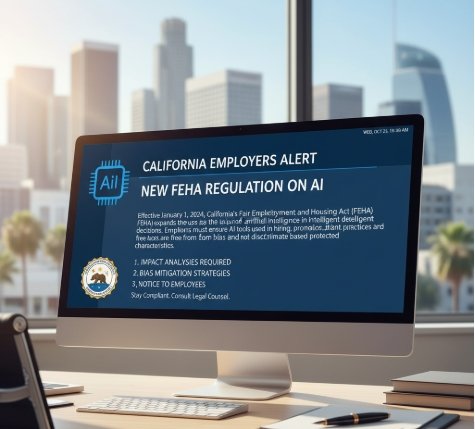
California employers are now facing a critical update to compliance obligations under the Fair Employment and Housing Act (FEHA). A new regulation addressing the use of artificial intelligence (AI) and automated decision-making tools in employment has been introduced, marking a significant shift in how companies must handle hiring, promotion, and workforce management processes.
What the New Regulation Means
The regulation recognizes that AI tools—whether for résumé screening, video interview analysis, or employee performance tracking—can inadvertently result in bias and discrimination. FEHA now explicitly extends its reach to cover employment decisions influenced by these technologies. This means employers will be held responsible if their chosen tools create a disparate impact on protected classes, even if the bias is unintentional.
Key Compliance Obligations for Employers
- Accountability for Third-Party Tools
Employers cannot simply rely on vendors’ assurances. If an AI system used by an employer results in discriminatory outcomes, liability still rests with the employer under FEHA. - Notice and Transparency
Employees and applicants must be informed if AI or automated systems are being used to evaluate them. Lack of transparency may expose businesses to complaints and investigations. - Regular Bias Audits
Companies are expected to monitor and audit AI tools for potential discriminatory effects. Failure to conduct regular reviews could increase legal risks. - Human Oversight
While AI may assist in decision-making, employers are required to maintain human review before taking adverse employment actions. AI alone cannot be the final authority.
Risks of Non-Compliance
Employers that fail to comply risk complaints, lawsuits, and enforcement actions by the California Civil Rights Department. Penalties may include monetary damages, injunctive relief, and reputational harm.
Steps Employers Should Take Now
- Review all hiring and employment-related AI tools in use.
- Conduct a comprehensive audit for potential bias or disparate impact.
- Update policies to reflect employee rights under FEHA.
- Train HR teams and hiring managers on responsible AI use.
- Document compliance measures to demonstrate good faith efforts.
Looking Ahead
California’s action reflects a broader national and global trend: holding employers accountable for how AI impacts workplace fairness. As regulators tighten rules, employers must balance innovation with compliance to protect both their workforce and their business.